

Football Matches Today: Live Scores, Fixtures & TV Schedule
Last Updated on March 19, 2026
Keeping track of every football match happening on any given day can feel overwhelming. Between domestic leagues, European competitions, international friendlies, and cup ties, there are often dozens of games kicking off within a few hours of each other. This guide breaks down exactly how to find football matches today, where to watch them, and what to look out for across the biggest competitions.
Whether you follow the Premier League, Champions League, EFL Championship, or lower-league action, the information below covers fixtures, live scores, TV broadcast details, and streaming options. Bookmark this page and come back whenever you need a quick overview of the day’s football schedule.
How to Find Football Matches Today

The simplest way to check today’s football fixtures is through dedicated score and fixture platforms. These aggregate data from hundreds of leagues and competitions worldwide, updating in real time as goals go in and results are confirmed.
Here are the most reliable sources for checking football matches today:
- BBC Sport Football Scores & Fixtures – covers all major leagues with a clean, easy-to-navigate layout. Scores update automatically without needing to refresh the page.
- Sky Sports Football – provides fixtures alongside TV scheduling, so you can see which matches are being broadcast live.
- FlashScore – one of the fastest live score services available, covering over 1,000 competitions globally.
- FotMob – a mobile-first app with push notifications for goals, line-ups, and match events.
- The official league websites – the Premier League, EFL, UEFA, and FIFA all maintain their own fixture lists with kick-off times and venue details.
Each of these platforms lets you filter by competition, date, and sometimes even by your favourite team. If you only care about one league, the official league website is usually the most accurate source. For a broader view of all football matches today, aggregators like FlashScore or BBC Sport are more practical.
Today’s Football Schedule by Competition
Football fixtures vary dramatically depending on the day of the week and the time of season. Midweek schedules tend to feature European competition or domestic cup ties, while weekends are dominated by league action. Here’s a breakdown of the major competitions and their typical scheduling patterns.
Premier League

The Premier League runs from August to May, with most matches taking place on Saturdays at 15:00 GMT. However, TV selections spread games across Friday evenings, Saturday lunchtimes, Sunday afternoons, and Monday nights. During busy periods like December and April, midweek rounds are also common.
Premier League fixtures are confirmed with exact kick-off times roughly six weeks in advance, once broadcasters have made their TV selections. If you’re looking for Premier League matches today, check the official premierleague.com fixture list or the broadcaster schedules on Sky Sports and TNT Sports.
EFL Championship, League One & League Two
The English Football League features a packed schedule with 46-game seasons across three divisions. Saturday at 15:00 remains the traditional kick-off time, though midweek rounds are frequent. EFL matches are broadcast through Sky Sports and the iFollow streaming service, which allows fans to watch their team’s away matches live.
Champions League & Europa League
UEFA club competitions typically take place on Tuesday, Wednesday, and Thursday evenings, with kick-off times at 17:45 or 20:00 GMT. The new league-phase format introduced in the %%currentyear%% season means more matchdays and more games per round. TNT Sports holds the broadcast rights for these competitions.
FA Cup & League Cup
Domestic cup ties are scheduled across various days depending on the round. Early FA Cup rounds often take place on Saturdays, while later rounds are spread across the week to accommodate TV coverage. The League Cup (Carabao Cup) typically uses midweek slots, particularly in the earlier rounds.
International Matches
FIFA international windows occur roughly every two months during the season. These windows feature World Cup qualifiers, Nations League matches, and friendlies. International football generally takes over the schedule completely during these breaks, with no domestic league action.
| Competition | Typical Match Days | Common Kick-Off Times (GMT) | Primary Broadcaster |
|---|---|---|---|
| Premier League | Sat, Sun, Mon, occasional midweek | 12:30, 15:00, 17:30, 20:00 | Sky Sports, TNT Sports, Amazon Prime |
| EFL Championship | Sat, Tue, Wed | 12:30, 15:00, 19:45, 20:00 | Sky Sports, iFollow |
| Champions League | Tue, Wed | 17:45, 20:00 | TNT Sports |
| Europa League | Thu | 17:45, 20:00 | TNT Sports |
| FA Cup | Sat, Sun, midweek (later rounds) | 12:15, 15:00, 17:30, 19:45 | BBC, ITV, ESPN |
| League Cup | Tue, Wed | 19:45, 20:00 | Sky Sports |
| International (FIFA windows) | Thu, Sat, Tue | 17:00, 19:45, 20:00 | ITV, Channel 4 |
Where to Watch Football Matches Today on TV

Broadcast rights for football are split across several platforms, which can make it confusing to figure out where a specific match is showing. Here’s a straightforward breakdown of who shows what.
Sky Sports
Sky Sports holds the largest share of live Premier League matches, plus extensive EFL coverage. They also broadcast the League Cup and selected Scottish Premiership games. A Sky Sports subscription or a NOW TV day pass gives access to all Sky Sports channels.
TNT Sports (formerly BT Sport)
TNT Sports is the home of UEFA club competitions, including the Champions League, Europa League, and Europa Conference League. They also show a selection of Premier League matches. TNT Sports is available through Discovery+ or as an add-on to certain TV packages.
Amazon Prime Video
Amazon broadcasts two full rounds of Premier League fixtures per season, typically one in December and one in midweek. All matches during these rounds are available to Amazon Prime subscribers at no extra cost beyond the standard membership fee.
BBC & ITV (Free-to-Air)
The BBC and ITV share FA Cup coverage, with selected matches broadcast live on terrestrial television. International matches featuring the home nations are also shown free-to-air, usually on ITV or Channel 4. The BBC’s Match of the Day provides highlights of every Premier League game on Saturday evenings.
Streaming and Online Options
Beyond traditional TV, several streaming services carry live football:
- NOW TV – day, weekly, or monthly passes for Sky Sports channels
- Discovery+ – includes TNT Sports content
- Amazon Prime Video – for their allocated Premier League rounds
- BBC iPlayer / ITVX – free-to-air matches streamed live
- iFollow / club streaming – EFL clubs offer live streams of away matches to season ticket holders and subscribers
If you’re trying to find out which channel is showing a specific match today, the quickest method is to check the “Live Football on TV” listings on sites like livesoccertv.com or the TV guide sections of Sky and TNT Sports websites.
Understanding Kick-Off Times and Scheduling

Football kick-off times are not random. They follow a structured system driven by broadcasting agreements, police recommendations, and competition regulations. Understanding this system helps you plan your viewing schedule more effectively.
The 3pm Blackout Rule
No live football can be broadcast on television on Saturdays between 14:45 and 17:15. This rule, unique to the domestic market, exists to protect match-day attendance at lower-league and non-league clubs. It means the traditional 15:00 Saturday kick-offs in the Premier League and EFL are never shown live on TV domestically.
This is why Premier League TV matches are moved to 12:30, 17:30, or Sunday/Monday slots. If you’re looking for football matches today and it’s a Saturday afternoon, you’ll need to rely on live score apps rather than TV coverage for the 15:00 games.
Midweek Scheduling
Midweek matches typically kick off at 19:45 or 20:00. European competition follows a staggered schedule, with some games starting at 17:45 and the main slate at 20:00. This allows broadcasters to show early and late games without overlap.
Bank Holidays and Festive Fixtures
The Christmas and New Year period features an intense run of fixtures, often with matches on Boxing Day, 28th December, New Year’s Day, and the first weekend of January. Bank holiday Mondays throughout the season may also feature rescheduled matches or cup ties.
Live Scores: Tracking Football Matches in Real Time
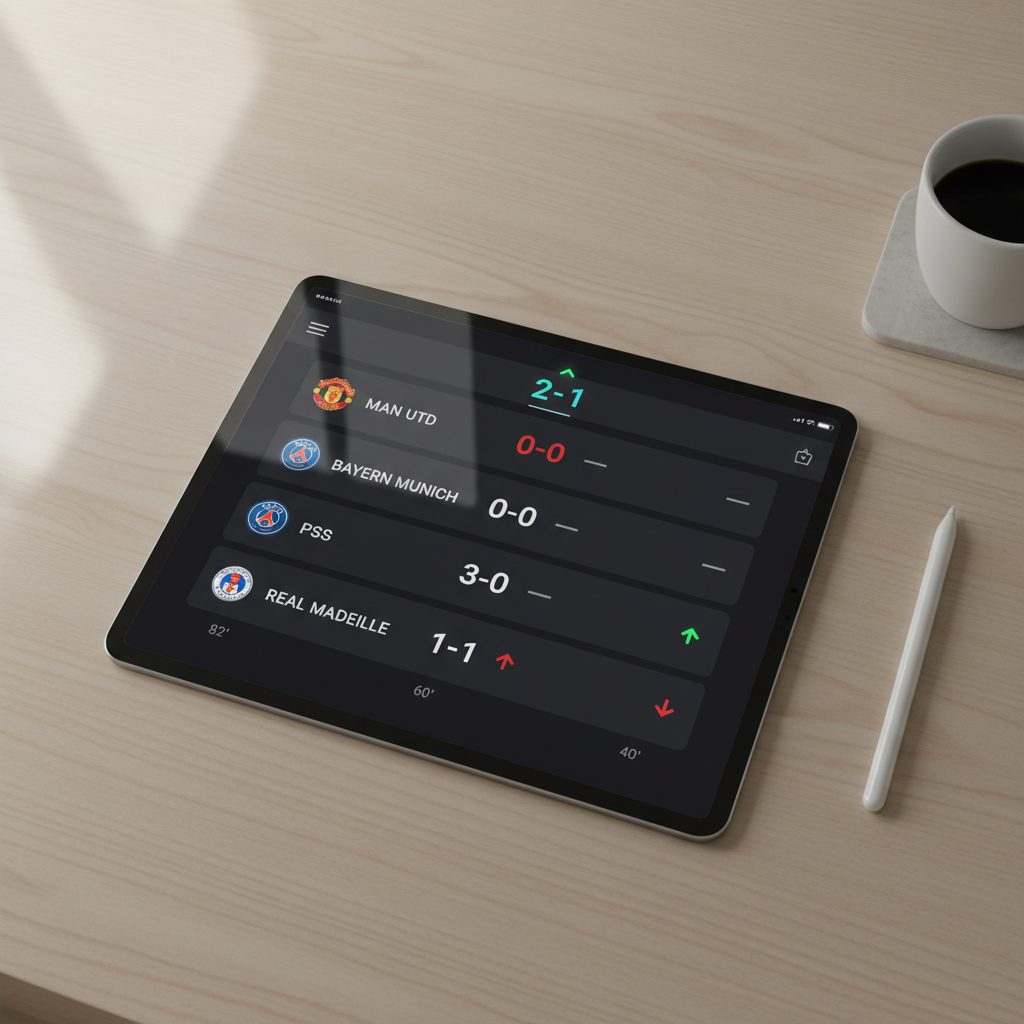
When you can’t watch a match live, real-time score tracking is the next best thing. Modern live score platforms offer far more than just the scoreline. They provide minute-by-minute commentary, expected goals (xG) data, possession stats, shot maps, and player ratings.
The best live score tools for tracking football matches today include:
- BBC Sport app – reliable, ad-free, with push notifications for goals and red cards
- FotMob – detailed match stats including xG, heat maps, and momentum graphs
- FlashScore – covers the widest range of leagues and updates within seconds of real events
- SofaScore – strong on player ratings and advanced statistics
- Google Search – simply searching “football scores” or a team name brings up live results in a card format
Each platform has its strengths. For pure speed, FlashScore is hard to beat. For depth of data, FotMob and SofaScore stand out. For simplicity and reliability, the BBC Sport app remains a solid choice.
Key Leagues and Fixtures to Watch

Not all football matches today carry the same weight. Some are title deciders, relegation six-pointers, or derby matches that carry decades of history. Knowing which fixtures matter most helps you prioritise your viewing.
Premier League Title Race
The Premier League title race typically intensifies from February onwards. Matches between the top four or five clubs carry enormous significance, but so do trips to difficult away grounds. Keep an eye on fixtures involving teams within six points of the league leader – these are the games that shape the title race.
Relegation Battles
Matches between teams in the bottom six of the Premier League or Championship often produce dramatic, high-stakes football. These games tend to be tense and unpredictable, with the consequences of defeat far greater than in mid-table encounters.
Derby Matches
Local derbies bring an extra layer of intensity regardless of league position. Fixtures like Manchester United vs Manchester City, Arsenal vs Tottenham, Liverpool vs Everton, and Celtic vs Rangers generate massive interest and often produce memorable moments.
European Nights
Champions League and Europa League matches involving domestic clubs attract huge audiences. The knockout rounds, which run from February to May, are particularly compelling. Group-stage (or league-phase) matches in the autumn can also be significant, especially when qualification is on the line in the final matchdays.
Frequently Asked Questions
How can I check which football matches are on today?
The quickest way is to visit BBC Sport’s football scores and fixtures page, use the FotMob or FlashScore apps, or search “football fixtures today” on Google. These platforms list every match across major leagues with kick-off times and live scores.
Why can’t I watch 3pm Saturday kick-offs on TV?
A broadcasting blackout prevents live coverage of football between 14:45 and 17:15 on Saturdays. This rule protects attendance at lower-league and non-league matches by ensuring fans aren’t tempted to stay home and watch top-flight games instead.
Which TV channels show live football today?
Sky Sports, TNT Sports, Amazon Prime Video, BBC, and ITV all broadcast live football depending on the competition and day. Sky Sports and TNT Sports cover the most matches, while BBC and ITV show FA Cup ties and international games free-to-air.
What is the best app for live football scores?
FotMob and FlashScore are widely considered the best apps for live football scores. FotMob excels in match statistics and player data, while FlashScore offers the fastest score updates across the widest range of leagues and competitions.
Can I watch football matches today for free?
Yes, selected matches are broadcast free-to-air on BBC and ITV, particularly FA Cup games and international fixtures. Amazon Prime also offers a free trial that includes access to their Premier League rounds. BBC iPlayer and ITVX stream their live matches at no cost.
How to Set Up Your Perfect Matchday Viewing Experience

Knowing where to find football scores and live streams is only half the battle. Setting yourself up properly for a full day of football makes the experience far more enjoyable. Whether you’re watching at home, following on your phone during a commute, or keeping tabs while at work, a little preparation goes a long way.
Creating a Multi-Screen Setup at Home
The beauty of modern football coverage is that you can follow multiple matches simultaneously. Many fans have adopted a multi-screen approach that lets them watch one match on the television while tracking others on a tablet or laptop. Here’s how to get the most out of your home setup:
- Primary screen: Use your main television for the match you care about most. This should be the game with the best picture quality and sound.
- Secondary screen: Keep a tablet or laptop open with a live score app like FotMob or FlashScore running. Set it to show all matches happening at the same time.
- Notifications: Enable push alerts for specific matches or teams on your phone so you never miss a goal, even if your attention drifts.
- Audio balance: If you’re streaming a second match on another device, consider using headphones for one feed so the commentary doesn’t clash.
This approach is particularly valuable during the famous 3pm Saturday kick-offs. Since these matches aren’t broadcast live on television, following them through live score apps, radio commentary on BBC Radio 5 Live, and social media becomes essential. Many fans find that the combination of radio commentary and a live score tracker creates an incredibly immersive experience.
Following Football on the Go
Not everyone has the luxury of sitting in front of a screen all day. If you’re out and about, your smartphone becomes your lifeline to the action. Here’s how to stay connected:
Data usage considerations: Streaming live football on mobile data can eat through your allowance quickly. A standard definition stream uses roughly 1-2 GB per hour, while HD can use 3-5 GB. If you’re on a limited data plan, stick to live score apps and text commentary, which use virtually no data at all.
Battery management: Live score apps with constant updates and push notifications can drain your battery faster than normal. If you’re going to be out all day, carry a portable charger or enable battery saver mode and check scores manually rather than relying on constant background updates.
Offline options: If you’re heading somewhere with poor signal — a countryside walk, for instance — download the BBC Sounds app beforehand. You can listen to live radio commentary on BBC Radio 5 Live, which works even on patchy connections since audio streaming requires far less bandwidth than video.
The Best Times to Watch Football Throughout the Week
Football isn’t just a weekend affair anymore. Matches are spread across the entire week, and knowing when games typically take place helps you plan your schedule. Here’s a general breakdown of when you can expect live football:
| Day | Typical Kick-Off Times | Common Competitions |
|---|---|---|
| Monday | 20:00 | Premier League, Championship |
| Tuesday | 17:45, 20:00 | Champions League, EFL Cup |
| Wednesday | 17:45, 20:00 | Champions League, Europa League |
| Thursday | 17:45, 20:00 | Europa League, Conference League |
| Friday | 20:00 | Championship, League One |
| Saturday | 12:30, 15:00, 17:30 | Premier League, EFL, FA Cup |
| Sunday | 14:00, 16:30 | Premier League, EFL |
During busy periods — such as the festive season in December and January — matches can be scheduled on almost every day, sometimes with multiple Premier League games in a single week. European competition weeks in midweek add even more action to follow.
Understanding Football Statistics and Data
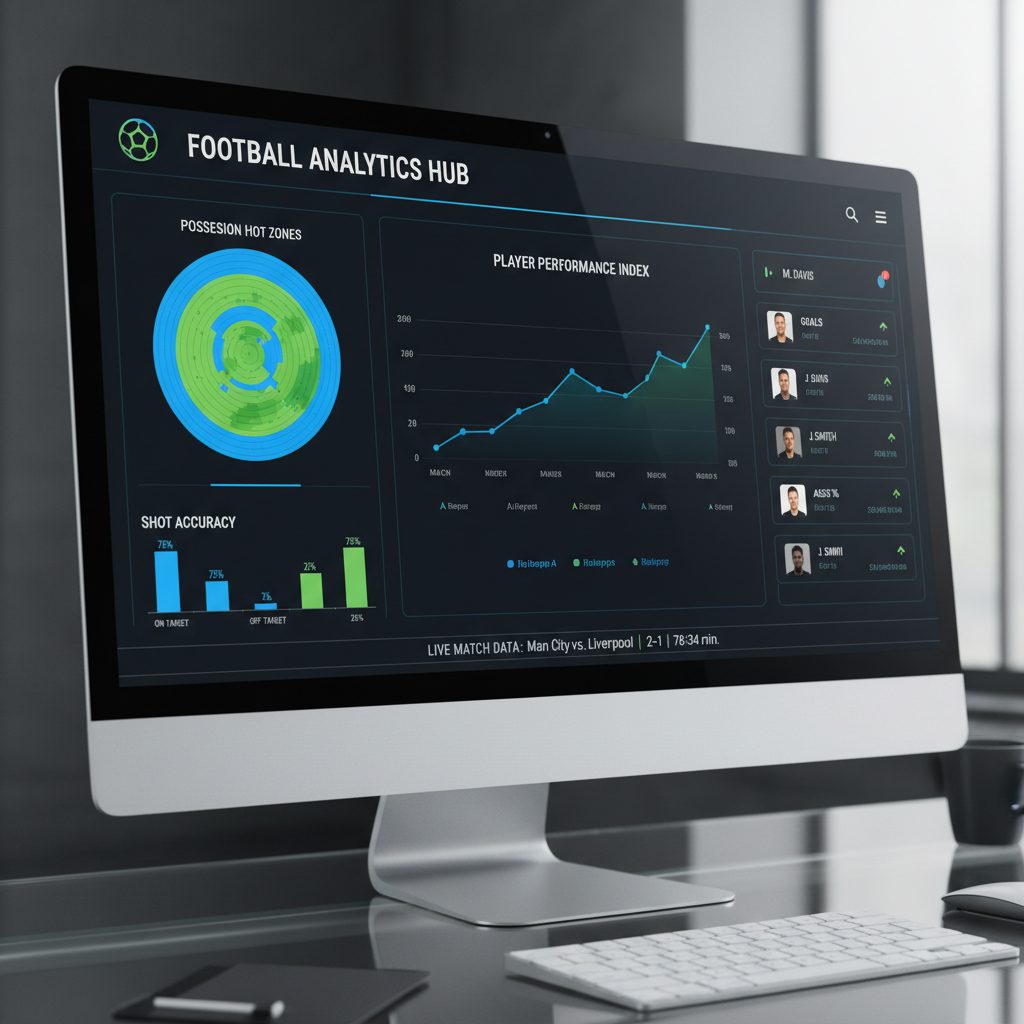
Modern football coverage goes far beyond simply knowing the score. Today’s fans have access to an extraordinary depth of statistical data that can transform how you understand and enjoy the game. Whether you’re a casual viewer or someone who enjoys deeper tactical analysis, understanding key statistics adds another layer to your matchday experience.
Essential Match Statistics Explained
When you open a live score app or check a match report, you’ll encounter a range of statistics. Here’s what the most important ones actually mean and why they matter:
Possession: This shows the percentage of time each team had the ball. While high possession often indicates dominance, it doesn’t always correlate with winning. Some teams deliberately play with less possession, preferring to counter-attack. A team with 35% possession can still be the better side if they’re creating more dangerous chances.
Expected Goals (xG): This has become one of the most talked-about statistics in modern football. Expected goals measures the quality of chances created, assigning a probability score to each shot based on factors like distance from goal, angle, and type of assist. An xG of 2.5 means that, on average, a team would score 2.5 goals from those chances. If a team has an xG of 2.5 but only scored once, they were arguably unlucky. If they scored four from an xG of 1.2, they were clinical or fortunate.
Shots on target: This counts how many shots were heading towards the goal (and would have gone in without a save or block on the line). It’s a more reliable indicator of attacking threat than total shots, which includes wayward efforts that never troubled the goalkeeper.
Pass completion rate: This shows the percentage of successful passes. Top Premier League sides typically achieve 85-90% pass completion, while more direct teams might sit around 70-75%. Context matters enormously — a team playing lots of long balls will naturally have a lower completion rate than one playing short passes in midfield.
Pressing intensity (PPDA): Passes Per Defensive Action measures how many passes a team allows the opposition before making a defensive intervention. A low PPDA (around 7-8) indicates intense pressing, while a higher number (15+) suggests a team sitting deeper and allowing the opposition to have the ball.
Where to Find Advanced Football Statistics
If basic match stats aren’t enough for you, several platforms offer deeper analytical data that can satisfy even the most data-hungry football fan:
- FBref: Powered by StatsBomb data, FBref is one of the most comprehensive free statistical resources available. It covers everything from basic stats to advanced metrics like progressive passes, shot-creating actions, and defensive pressures. It’s particularly popular among tactical analysts and bloggers.
- Understat: This site focuses specifically on expected goals data and is completely free to use. It provides xG figures for every match in the top European leagues, along with player-level data and season-long trends.
- WhoScored: Offering player ratings based on statistical performance, WhoScored provides detailed match data including heat maps, pass maps, and individual player statistics. Their rating system, while not perfect, gives a quick snapshot of who performed well.
- Transfermarkt: While primarily known for player valuations and transfer news, Transfermarkt also offers comprehensive squad data, fixture lists, and historical results that are invaluable for research.
- The Athletic: For those willing to pay for a subscription, The Athletic combines statistical analysis with expert journalism. Their data visualisations and tactical breakdowns are among the best available.
Using Statistics to Enhance Your Matchday Experience
Statistics become most valuable when you use them to tell a story about what’s happening on the pitch. Here are some practical ways to incorporate data into your viewing:
Pre-match research: Before a game, check each team’s recent form, home and away records, and head-to-head history. This gives you context that makes the match more meaningful. Knowing that a team hasn’t won away from home in eight matches, for example, adds tension to every away fixture.
In-match tracking: While watching, keep an eye on live statistics through your secondary screen. If one team has 70% possession but zero shots on target, that tells you they’re dominating the ball without creating genuine danger. This kind of insight helps you understand the tactical battle unfolding in front of you.
Post-match analysis: After the final whistle, comparing xG to actual goals scored can reveal whether the result was fair. If your team lost 1-0 but had an xG of 2.3 compared to the opposition’s 0.4, you can take some consolation from the fact that the performance was actually strong, even if the result wasn’t.
The growing availability of data has also fuelled the rise of football podcasts and YouTube channels dedicated to tactical analysis. Shows like The Totally Football Show, Tifo Football, and The Athletic Football Podcast regularly use statistics to break down matches and trends, giving fans accessible ways to deepen their understanding without needing to crunch numbers themselves.
Building Your Own Statistical Framework
Once you’ve started incorporating data into your match-watching routine, the next step is developing your own framework for evaluating players and teams. You don’t need a degree in data science to do this — just a consistent approach and a willingness to look beyond the obvious.
Start by identifying the metrics that matter most to you. If you’re passionate about attacking football, you might focus on xG, shot-creating actions, and progressive passes. If defensive solidity is what you value, clean sheets, tackles won, and pressures in the final third might be more relevant. The key is to build a personal toolkit that helps you assess what you’re watching with greater clarity.
Creating a Player Evaluation System
Professional scouts use multi-layered evaluation systems, but you can create a simplified version for your own use. Here’s a basic approach that works well for most fans:
- Choose your position group: Decide whether you’re evaluating goalkeepers, defenders, midfielders, or forwards. Each position requires different metrics.
- Select 4-6 key metrics: Pick the statistics most relevant to that position. For a central midfielder, you might choose pass completion rate, progressive passes, tackles, interceptions, and key passes.
- Establish benchmarks: Use league averages as your baseline. A player performing above the league average in most of your chosen metrics is likely performing well.
- Compare across similar players: Don’t compare a defensive midfielder to an attacking midfielder. Keep your comparisons within the same role for meaningful results.
- Account for context: A player at a team that dominates possession will naturally have different statistical profiles than one at a team that plays on the counter-attack.
This kind of structured thinking transforms casual opinions into informed assessments. Instead of saying “I think that player is good,” you can say “that player ranks in the top 15% for progressive carries and the top 20% for shot-creating actions among Premier League midfielders.” That’s a much more compelling argument.
Team Performance Dashboards
Many fans now create informal dashboards to track their team’s performance throughout the season. You don’t need fancy software — a simple spreadsheet works perfectly. Track metrics like:
| Metric | What It Tells You | Where to Find It |
|---|---|---|
| xG for and against per match | Overall quality of chances created and conceded | FBref, Understat |
| Possession percentage | General style of play and dominance | Most match reports |
| PPDA (Passes Per Defensive Action) | Pressing intensity | Understat |
| Set-piece xG | Threat from dead-ball situations | FBref |
| Progressive passes per 90 | How effectively the team moves the ball forward | FBref |
| High turnovers | Frequency of winning the ball in dangerous areas | Opta-based platforms |
Over the course of a season, patterns emerge that are invisible from watching individual matches. You might notice that your team’s pressing intensity drops significantly in the second half of matches, suggesting a fitness or tactical issue. Or you might spot that set-piece xG has been climbing steadily since a new coach arrived, indicating improved dead-ball routines.
The Limitations of Football Statistics
For all the benefits that data brings to football fandom, it’s essential to understand its limitations. Statistics are powerful tools, but they’re not infallible, and treating them as gospel can lead you astray just as easily as ignoring them entirely.
Sample Size Problems
One of the most common mistakes fans make with football data is drawing conclusions from too few matches. Football is a low-scoring sport, which means variance plays an enormous role in short-term results. A striker who scores five goals in three matches isn’t necessarily on track for a 60-goal season, just as a team that loses their first two league games isn’t necessarily heading for relegation.
As a general rule, most football metrics need at least 10-12 matches to start stabilising. Some, like shooting accuracy and conversion rates, can take even longer — sometimes half a season or more before they become truly reliable indicators. This is why early-season tables and statistics should always be treated with caution.
The xG metric itself is a good example. A single match xG can be heavily influenced by one or two big chances. If a team has an xG of 3.0 in a match, it might mean they had 15 decent chances, or it might mean they had two near-certain goals and a handful of half-chances. The context behind the number matters enormously, and that context often gets lost in social media discussions.
What Numbers Can’t Capture
There are aspects of football that remain stubbornly resistant to quantification. Leadership, for instance, is almost impossible to measure statistically. A centre-back who organises the defensive line, communicates constantly with teammates, and raises the performance of those around them provides enormous value that won’t show up in any data set.
Similarly, off-the-ball movement is one of the most important skills in football, yet it’s incredibly difficult to track comprehensively. A forward who makes intelligent runs to create space for teammates — even when they never receive the ball — is contributing significantly to the team’s attacking play. Traditional statistics miss this entirely, and even advanced metrics only capture a fraction of it.
Other hard-to-quantify elements include:
- Game intelligence: The ability to read situations and make the right decision under pressure
- Composure: How well a player performs in high-stakes moments
- Dressing room influence: The impact a player has on team morale and culture
- Adaptability: How quickly a player adjusts to different tactical systems or opponents
- Communication: Vocal organisation that helps teammates position themselves correctly
This is why the best analysts — whether professional or amateur — always combine statistical evidence with the eye test. Numbers can tell you what is happening, but watching the game tells you why and how. The two approaches complement each other beautifully when used together.
The Context Trap
Raw statistics without context can be deeply misleading. Consider a midfielder who completes 92% of their passes. That sounds impressive until you discover that 85% of those passes are sideways or backwards, with very few progressive or forward passes attempted. Compare that to a midfielder who completes only 78% of their passes but attempts far more ambitious, line-breaking balls. The second player might actually be more valuable to their team despite the lower completion rate.
League context matters too. A player who dominates statistically in the Championship won’t necessarily replicate those numbers in the Premier League, where the pace of play is faster, the pressing is more intense, and the quality of opposition is significantly higher. This is one reason why some promoted teams struggle so dramatically — the statistical profiles that made them successful at a lower level don’t translate directly to the top flight.
Similarly, a team’s style of play heavily influences individual statistics. Players at possession-dominant clubs will naturally accumulate more passes, more touches, and often more progressive carries simply because they have the ball more often. This doesn’t necessarily mean they’re better than equivalent players at teams who play a more direct style. Adjusting for possession and team context is crucial for fair comparisons.
Football Analytics in the Transfer Market

One of the most fascinating applications of football data is in the transfer market, where clubs increasingly use analytics to identify undervalued players and avoid costly mistakes. Understanding how this process works can add another dimension to your enjoyment of transfer windows.
The Moneyball Effect
The concept of using data to find market inefficiencies — popularised by the book and film Moneyball about baseball’s Oakland Athletics — has been embraced by football clubs across the pyramid. The basic idea is simple: find players whose statistical profiles suggest they’re performing at a higher level than their market value reflects, then sign them before other clubs catch on.
Brentford are perhaps the most prominent example of this approach in English football. Under owner Matthew Benham, a professional gambler who made his fortune through statistical modelling, the club built a recruitment model that consistently identified talented players at bargain prices, developed them, and sold them on for significant profits. Players like Ollie Watkins, Said Benrahma, and Ivan Toney were all recruited with heavy input from data analysis before being sold for many times their original transfer fees.
Brighton and Hove Albion have followed a similar path under technical director David Weir and their data-driven recruitment team. The club’s ability to sign relatively unknown players from smaller European leagues and develop them into Premier League stars — and sometimes into players worth tens of millions — has been one of the most impressive stories in modern English football.
Key Metrics That Drive Recruitment
So what exactly are clubs looking at when they assess potential signings? While the specific models vary from club to club, several key metrics consistently feature in data-driven recruitment processes. Understanding these can help you appreciate why certain transfers happen and why some seemingly odd signings turn out to be strokes of genius.
Expected goals (xG) measures the quality of chances a player creates or receives, rather than just the raw number of goals scored. A striker who scores 10 goals from chances worth 15 xG might actually be underperforming, while a forward who scores 8 from chances worth 5 xG could be overperforming — and might regress in future. Clubs use this to identify forwards who are getting into excellent positions but perhaps playing for weaker teams where service is inconsistent.
Progressive carries and passes measure how effectively a player moves the ball forward. This is particularly useful for identifying midfielders and defenders who can break lines and transition play from defence to attack. A centre-back in the second tier of a European league who ranks highly for progressive passes might be exactly what a Premier League club needs to improve their build-up play.
Pressing intensity has become increasingly important as more managers adopt high-pressing systems. Metrics like PPDA (passes allowed per defensive action) and pressing success rate help clubs identify players who fit their tactical approach. A forward who presses relentlessly but plays in a league where that isn’t valued might be available at a fraction of the cost of a similar player already proven in a pressing system.
Defensive actions in the final third can highlight attackers who contribute significantly to defensive work — something that doesn’t show up in traditional statistics like goals and assists but is highly valued by modern managers. These players often represent excellent value because their market price reflects their attacking output rather than their overall contribution.
The Limitations of Data
It’s important to note that no successful club relies solely on data. Statistics can tell you a lot about what a player does, but they struggle to capture equally important factors like personality, dressing room influence, adaptability to a new culture, and mental resilience under pressure. This is why most clubs combine data analysis with traditional scouting — using numbers to narrow down a longlist of targets, then sending scouts to watch the remaining candidates in person.
Liverpool under Jürgen Klopp were widely regarded as having one of the best blended approaches, combining the data expertise of their research department with the football knowledge of their scouting team. The signing of Mohamed Salah from Roma is a perfect example — the data identified him as significantly undervalued relative to his statistical output, and scouts confirmed that his playing style would fit perfectly into Klopp’s system.
Context also matters enormously when interpreting data. A player’s statistics are heavily influenced by the team they play in, the league they compete in, and the tactical system they operate within. A midfielder who looks exceptional in a possession-dominant team might struggle in a side that plays more directly. Adjusting for these contextual factors is one of the biggest challenges in football analytics, and it’s where the most sophisticated clubs gain their edge.
Building Your Own Analytical Framework
You don’t need access to professional-grade tools to start applying analytical thinking to your football watching. With freely available resources and a structured approach, you can develop a framework that deepens your understanding of the game and helps you form more informed opinions about tactics, players, and results.
Free Resources to Get Started
Several websites offer high-quality football statistics at no cost, making it easier than ever for fans to engage with the analytical side of the sport. Here are some of the most useful starting points:
- FBref.com — Powered by StatsBomb data, this is arguably the most comprehensive free football statistics website available. It covers major leagues worldwide and provides detailed player and team statistics including xG, progressive passes, defensive actions, and much more.
- Understat.com — Focuses specifically on expected goals data and provides excellent visualisations including shot maps and xG timelines for individual matches. It’s a great resource for understanding how matches actually unfolded beyond the scoreline.
- WhoScored.com — Offers Opta-powered statistics and player ratings, along with detailed match reports that include passing maps, heat maps, and tactical summaries.
- Transfermarkt.com — While primarily known for transfer values, it also provides comprehensive squad information, injury histories, and career statistics that are useful for contextualising player performance.
A Step-by-Step Approach
Rather than trying to absorb everything at once, consider building your analytical skills gradually. Here’s a practical progression that many football analysts recommend:
- Start with xG. After each match, compare the expected goals figures with the actual scoreline. This will quickly train you to distinguish between deserved and undeserved results, and you’ll start noticing patterns — teams that consistently outperform their xG, and teams that are riding their luck.
- Add passing networks. Look at passing maps and average position graphics for matches you’ve watched. Compare what you saw with what the data shows. Did the team really dominate the left flank as you thought, or was that just your perception based on a couple of memorable moments?
- Explore player comparisons. Use radar charts and percentile rankings on FBref to compare players in the same position. This is where data becomes genuinely eye-opening — you’ll discover that players you assumed were similar actually have very different statistical profiles.
- Consider context. Always ask yourself what factors might be influencing the numbers. Is a player’s decline in output due to genuine deterioration, or have they been moved to a different position? Has a team’s defensive improvement coincided with a tactical change or a new signing?
- Form hypotheses and test them. The most rewarding part of football analysis is making predictions based on data and seeing whether they come true. If a newly promoted team has strong underlying numbers despite poor results, predict that they’ll improve — then see if you’re right.
Combining the Eye Test with Data
The most insightful football analysis comes from combining what you see on the pitch with what the data tells you. Neither approach is sufficient on its own. The eye test can be deceived by dramatic moments, narrative bias, and the limitations of watching from a single camera angle. Data can be misleading without context, can miss important qualitative factors, and can sometimes tell you what is happening without explaining why.
When you watch a match, try to form your own impressions first — which team looked better, which players stood out, what tactical patterns did you notice? Then check the data afterwards to see whether it confirms or challenges your observations. When there’s a discrepancy between what you saw and what the numbers say, that’s often where the most interesting analysis lies.
For example, you might watch a match and feel that a particular midfielder had a quiet game. But the data might show they completed more progressive passes than anyone else on the pitch and had the highest pressing success rate. This doesn’t mean your observation was wrong — it means the player’s contribution was subtle and systematic rather than flashy and obvious. That’s a valuable insight that makes you a better judge of football.
Common Analytical Pitfalls to Avoid
As you develop your analytical skills, it’s worth being aware of some common mistakes that even experienced analysts sometimes make. Avoiding these will help you draw more accurate conclusions and have more productive discussions about the game.
Small Sample Size Problems
Football generates far less data per match than sports like baseball or basketball, which means small sample sizes are a persistent issue. Drawing firm conclusions from a handful of matches is risky. A striker who scores five goals in three games isn’t necessarily in the form of their life — they might have had an xG of 4.8, meaning their output is roughly in line with expectations and could easily dry up.
As a general rule, most football metrics need at least 10-15 matches before they become reasonably reliable, and some — particularly shooting metrics — need significantly more. Early-season tables and statistics should always be treated with caution, no matter how dramatic the storylines they appear to create.
Correlation vs. Causation
Just because two things happen together doesn’t mean one causes the other. If a team’s results improve after signing a new player, it’s tempting to credit the new arrival. But the improvement might also be due to easier fixtures, injured players returning, a tactical tweak, or simply random variation. Isolating the impact of individual factors in a team sport is extremely difficult, and confident claims about causation should always be questioned.
Survivorship Bias
We tend to remember the transfer successes and forget the failures. When people praise a club’s data-driven recruitment, they’re usually focusing on the signings that worked out brilliantly while overlooking the ones that didn’t. Every club, no matter how sophisticated their approach, makes signings that don’t pan out. The goal of good recruitment isn’t to eliminate failure entirely — it’s to improve the hit rate and ensure that successes outweigh disappointments over time.
Over-Reliance on Single Metrics
No single statistic can capture the full complexity of a football player’s contribution. xG is a powerful tool, but a player’s value extends far beyond the chances they create or convert. Passes completed tells you nothing about the difficulty or importance of those passes. Tackles won might actually indicate poor positioning if a player is constantly having to make recovery challenges. Always look at multiple metrics together and consider the broader context before forming judgements.
The Importance of Sample Size
Small sample sizes are one of the most common traps in football analytics. A striker who scores five goals in his first three matches might look like the signing of the season, but three games tell you almost nothing about a player’s true ability. Similarly, judging a manager’s tactical system after just a handful of fixtures is premature. Statistical patterns only become meaningful over larger samples — typically a minimum of around 10 to 15 matches for team-level data, and often a full season or more for individual player metrics. Be wary of anyone drawing sweeping conclusions from a few weeks of football.
Context Collapse
Numbers stripped of their context can be deeply misleading. A midfielder who averages 90 passes per match in a possession-dominant side will naturally have different statistics than an equally talented midfielder playing for a team that sits deep and counters. Comparing them directly without accounting for system, teammates, league quality, and opposition level produces flawed conclusions. The best analysts always frame their data within the specific context in which it was generated, and you should demand the same from any analysis you consume.
Building Your Own Analytical Framework
With a solid understanding of the key metrics, tools, and potential pitfalls, you’re well-positioned to develop your own approach to football analysis. This doesn’t require expensive software or a mathematics degree. It requires curiosity, consistency, and a willingness to challenge your own assumptions.
Start With a Clear Question
The best analysis always begins with a specific question rather than aimlessly trawling through spreadsheets. Instead of vaguely wondering whether a player is “good,” try asking something more focused. For example: “Is this striker finishing chances at an unsustainable rate?” or “How does this team’s pressing intensity compare to the league average?” A clear question guides your research, helps you choose the right metrics, and makes your conclusions more meaningful.
Combine Data With the Eye Test
The most effective football analysts don’t choose between statistics and watching matches — they use both. Data can highlight patterns that are invisible to the naked eye, such as a gradual decline in a team’s chance creation quality over several months. But watching the actual football provides context that numbers alone cannot capture — a player’s body language, their movement off the ball, how they communicate with teammates, and the tactical nuances that don’t show up in any dataset.
Think of data as a torch that illuminates specific areas of the pitch, while the eye test provides the panoramic view. Neither is complete without the other. When the numbers and the visual evidence point in the same direction, you can be reasonably confident in your conclusions. When they contradict each other, that’s often where the most interesting analysis begins.
Track Your Predictions
One of the most valuable habits you can develop is recording your analytical predictions and checking back on them later. If you believe a team is overperforming based on the underlying data, write it down. If you think a particular signing will struggle because the metrics suggest a poor fit, note your reasoning. Over time, reviewing your hits and misses will sharpen your analytical instincts and reveal any systematic biases in your thinking. It’s humbling but enormously educational.
Build a Personal Database
You don’t need sophisticated software to start tracking the data points that matter most to you. A simple spreadsheet can serve as a powerful analytical tool. You might track a specific team’s xG for and against each match, record the progressive passes of a midfielder you’re monitoring, or log the defensive actions of a centre-back you rate. Over time, this personal database becomes an invaluable resource that allows you to spot trends, test theories, and develop a deeper understanding of the game.
The Future of Football Analytics
Football analytics is evolving rapidly, and the coming years promise even more sophisticated tools and techniques that will further transform how we understand the sport.
Artificial Intelligence and Machine Learning
AI and machine learning are already being used by elite clubs to process vast amounts of tracking data and identify patterns that would be impossible for humans to detect manually. These technologies can analyse thousands of hours of match footage, predict injury risk based on physical load data, and even simulate tactical scenarios to test potential strategies before they’re implemented on the training pitch. As these tools become more accessible, their influence on football decision-making will only grow.
Tracking Data Becoming More Accessible
Positional tracking data — which records the exact location and movement of every player and the ball multiple times per second — has traditionally been available only to professional clubs and a handful of data companies. However, this is gradually changing. As tracking technology becomes cheaper and more widespread, public access to this rich data source will expand, opening up entirely new avenues of analysis for fans, journalists, and independent researchers alike.
Integration With Biomechanical Data
The next frontier involves combining tactical and performance data with biomechanical information — how a player’s body moves, the forces involved in their running and kicking, and the physical stress placed on joints and muscles. This integration could revolutionise injury prevention, rehabilitation planning, and even talent identification by revealing physical characteristics that predict future performance potential.
Fan Engagement and Broadcasting
Analytics is increasingly shaping how football is presented to audiences. Match broadcasts now regularly feature xG graphics, passing networks, and pressing statistics. Fantasy football platforms incorporate advanced metrics into their scoring systems. Betting markets are heavily influenced by analytical models. This trend will continue, and fans who understand the underlying concepts will get far more from these enriched viewing experiences.
Conclusion
Football analytics has come a long way from simple tallies of goals and assists. Today’s landscape offers a rich toolkit of metrics, models, and visualisation techniques that can deepen your understanding of the beautiful game in ways that were unimaginable just a decade ago. From expected goals and progressive passes to pressing intensity and possession value models, these tools allow us to look beneath the surface of results and explore the underlying processes that truly determine success on the pitch.
But the most important lesson in football analytics isn’t about any single metric or platform. It’s about developing a mindset — one that values evidence over opinion, embraces uncertainty, and constantly seeks to understand why things happen rather than simply noting what happened. Whether you’re evaluating a potential transfer target, debating tactics with friends, or simply trying to enjoy matches at a deeper level, this analytical mindset will serve you well.
Start small. Pick a few metrics that interest you, explore one or two of the free platforms mentioned in this guide, and begin asking better questions about the football you watch. You don’t need to become a data scientist to benefit from analytics — you just need to be curious and willing to look beyond the scoreline. The data is out there, the tools are increasingly accessible, and the insights waiting to be discovered are genuinely fascinating. The beautiful game has never been more interesting to explore.
Frequently Asked Questions About Football Analytics
As you begin your journey into football analytics, you’ll likely encounter some common questions. Below, we’ve compiled answers to the most frequently asked questions to help you navigate this fascinating field with confidence.
What Is the Difference Between Traditional Statistics and Advanced Analytics?
Traditional football statistics focus on counting events — goals scored, assists made, clean sheets kept, and similar straightforward tallies. While these numbers tell you what happened, they don’t always explain why or how it happened. Advanced analytics go several layers deeper. They use mathematical models and contextual data to assess the quality and value of actions on the pitch.
For example, a traditional stat might tell you a striker scored 15 goals in a season. Advanced analytics would tell you that the chances he converted were worth 18.5 expected goals, suggesting he actually underperformed relative to the quality of opportunities he received. This distinction is crucial for understanding whether a player’s output is sustainable or likely to regress.
Think of it this way: traditional stats are like reading the headline of a newspaper article, while advanced analytics are like reading the full story with all its context and nuance.
Do I Need a Maths or Programming Background to Understand Football Analytics?
Absolutely not. While having skills in mathematics, statistics, or programming languages like Python and R can certainly help you conduct your own original research, they are by no means prerequisites for understanding and using football analytics. The vast majority of analytical concepts can be grasped with basic numeracy and a willingness to learn.
Many of the platforms and tools discussed in this guide — such as FBref, Understat, and various Twitter-based analysts — present data in accessible, visual formats that require no technical background to interpret. Expected goals, for instance, is a concept that can be understood intuitively: some chances are easier to score than others, and xG simply quantifies that difficulty on a scale from 0 to 1.
If you do want to develop technical skills over time, there are excellent free resources available. Python libraries like mplsoccer and statsbombpy make it relatively straightforward to create your own visualisations, even if you’re a programming beginner. But this is entirely optional — you can gain tremendous insight simply by reading and interpreting the work of others.
How Reliable Is Expected Goals (xG) as a Metric?
Expected goals is one of the most well-validated metrics in football analytics, but like any model, it has limitations. Research has consistently shown that xG is a better predictor of future goal-scoring than actual goals scored. In other words, a team’s xG total over a stretch of matches tends to forecast their upcoming results more accurately than their actual goal tally does.
However, xG models vary in sophistication. Basic models might only consider shot location, while more advanced versions incorporate factors like:
- The body part used (foot, head, other)
- The type of assist (through ball, cross, cutback)
- Whether the shot followed a dribble
- Goalkeeper positioning
- Defensive pressure on the shooter
- The speed of the attacking move
The key thing to remember is that xG describes probabilities, not certainties. A player who consistently outperforms their xG over multiple seasons — like some elite finishers do — may genuinely possess above-average finishing skill. But a player who dramatically outperforms xG over a short sample is more likely experiencing a hot streak that will eventually cool off.
Can Analytics Really Predict Match Results?
Analytics can improve the accuracy of predictions, but football remains inherently unpredictable — and that’s part of what makes it so compelling. No model can account for every variable: a deflected goal, a referee’s controversial decision, a sudden injury, or a moment of individual brilliance that defies statistical expectation.
What analytics can do is identify probabilities. A well-built model might tell you that Team A has a 55% chance of winning a particular match based on their underlying performance data, the quality of their squad, home advantage, and other factors. Over the course of a season, these probability estimates tend to be well-calibrated — meaning that events assigned a 55% probability do indeed occur roughly 55% of the time.
This is why analytics are particularly powerful over larger sample sizes. Predicting the outcome of a single match is extremely difficult, but identifying which teams are likely to finish in the top four over a 38-match season is a much more tractable problem. The noise of individual matches tends to average out over time, allowing the underlying signal of team quality to emerge.
How Do Professional Clubs Use Analytics?
The use of analytics in professional football has grown enormously over the past decade. Today, virtually every top-flight club employs data analysts, and many have entire departments dedicated to football intelligence. The applications span several key areas:
- Recruitment and scouting: Clubs use data to identify transfer targets who fit specific tactical profiles, often uncovering undervalued players in leagues that receive less mainstream attention
- Tactical analysis: Coaching staff use data to prepare for opponents, identifying weaknesses to exploit and strengths to neutralise
- Performance monitoring: GPS and tracking data help manage player workloads, reduce injury risk, and optimise training schedules
- Set-piece design: Clubs analyse set-piece data to develop routines that maximise scoring opportunities and minimise defensive vulnerabilities
- Contract negotiations: Data can inform decisions about player valuations, contract lengths, and wage structures
Some clubs have become particularly well-known for their data-driven approaches. The story of how certain mid-table clubs have punched above their financial weight through smart, analytics-informed recruitment has become one of the most compelling narratives in modern football.
What Are the Biggest Limitations of Football Analytics?
While football analytics has made remarkable strides, it’s important to acknowledge its limitations honestly. Understanding these constraints will make you a more thoughtful and effective consumer of data.
Off-the-ball actions are hard to capture. Much of what happens in football occurs away from the ball — intelligent runs that create space, defensive positioning that prevents chances, or communication that organises teammates. Event data, which records on-ball actions, misses all of this. Tracking data helps address this gap, but it remains expensive and not widely available to the public.
Context is often missing. A pass completion rate of 85% means very different things depending on the tactical system, the quality of opposition, the match state, and countless other contextual factors. While analysts work hard to account for context, no model can capture every nuance of a live football match.
Small sample sizes are a persistent challenge. A footballer might take only 50-80 shots in a season, which is a relatively small sample from which to draw firm conclusions about finishing ability. Compare this to baseball, where a batter might have 500+ plate appearances in a single season, and you can see why football analytics must grapple with greater uncertainty.
Human and psychological factors are difficult to quantify. Leadership, mentality, dressing room dynamics, and the ability to perform under pressure are all critically important in football but extremely difficult to measure with data. The best analysts recognise that these qualitative factors must complement quantitative analysis, not be replaced by it.
How Can I Start My Own Football Analytics Projects?
If you’re inspired to go beyond consuming analytics and start creating your own, here’s a practical roadmap to get started:
- Learn the basics of a programming language. Python is the most popular choice in the football analytics community. Free courses on platforms like Codecademy or freeCodeCamp can get you up and running within a few weeks.
- Explore freely available data. StatsBomb offers free open data covering several competitions, and FBref provides downloadable tables. These are excellent starting points for your first projects.
- Follow tutorials from the community. Many generous analysts share step-by-step guides for creating shot maps, pass networks, pizza charts, and other common visualisations. The Friends of Tracking YouTube channel is particularly valuable.
- Start with simple questions. Don’t try to build a comprehensive player evaluation model on your first attempt. Instead, start with focused questions like “Which players in the league attempt the most progressive carries?” or “How does Team X’s pressing intensity compare at home versus away?”
- Share your work and seek feedback. Posting your analysis on social media or football analytics forums invites constructive criticism that will accelerate your learning. The community is generally welcoming and supportive of newcomers.
Remember that every expert analyst started exactly where you are now. The field is still young enough that meaningful contributions can come from anyone with curiosity, rigour, and a genuine love for the game.
Final Thoughts: Embracing the Data-Driven Future of Football
Football analytics is not a passing trend — it is a fundamental shift in how we understand, discuss, and enjoy the sport. The tools and concepts covered in this guide represent just the beginning of what promises to be an ever-expanding frontier of knowledge. As tracking data becomes more widely available, as machine learning models grow more sophisticated, and as the community of analysts continues to innovate, our ability to understand football at a granular level will only deepen.
Yet for all the power of data, football will always retain its capacity to surprise, delight, and confound. No algorithm can fully capture the joy of a last-minute winner, the tactical chess match between two elite managers, or the raw emotion of a packed stadium willing their team forward. Analytics doesn’t diminish these experiences — it enriches them by adding another layer of appreciation for the complexity and beauty of what unfolds on the pitch.
Whether you’re a casual fan looking to understand the game better, an aspiring analyst hoping to work in the industry, or simply someone who enjoys a good debate about football, the world of analytics has something to offer you. The key is to remain curious, stay open-minded, and never stop asking questions. The beautiful game rewards those who look closely — and the data is there to help you see what you might otherwise miss.